As a pilot, I spend much of my working life following procedures and using systems designed around a particular task. Where a control sits, how software presents information and the sequence of a checklist all affect how easily I can do my job. A procedure can make sense on paper and still be cumbersome in practice. When that happens, I want to understand what makes it difficult. If the correct way involves unnecessary effort, there is a risk that people start finding shortcuts or skipping steps.
I also want feedback on the work I do. Take a procedure intended to save fuel. I can understand the purpose and follow it carefully, but if I never hear whether it produces the expected savings, the goal becomes distant. The procedure remains, while the reason for doing it gets less attention. It’s funny how often I return to these things when thinking about the business side of my life. Different work, different surroundings, but familiar questions about effort, purpose and results.
Those questions have been part of 2Way from the beginning. Associations were using separate tools for surveys, newsletters, documents and everyday communication. Each tool served a purpose, but someone had to manage the work between them, and members had to know where to go. Our original goal was to bring more of that work into one platform. We wanted to reduce the effort of keeping members informed and make the association’s information and services easier to access.
As we worked with clients, the connections to their existing systems became just as important. Integrating with clients’ membership systems reduced the need to maintain member details separately in 2Way. Members could update their own information through the connected membership system, reducing the routine work passed to association staff. It addressed a practical problem: the same details should not need someone’s attention in several places whenever something changes.
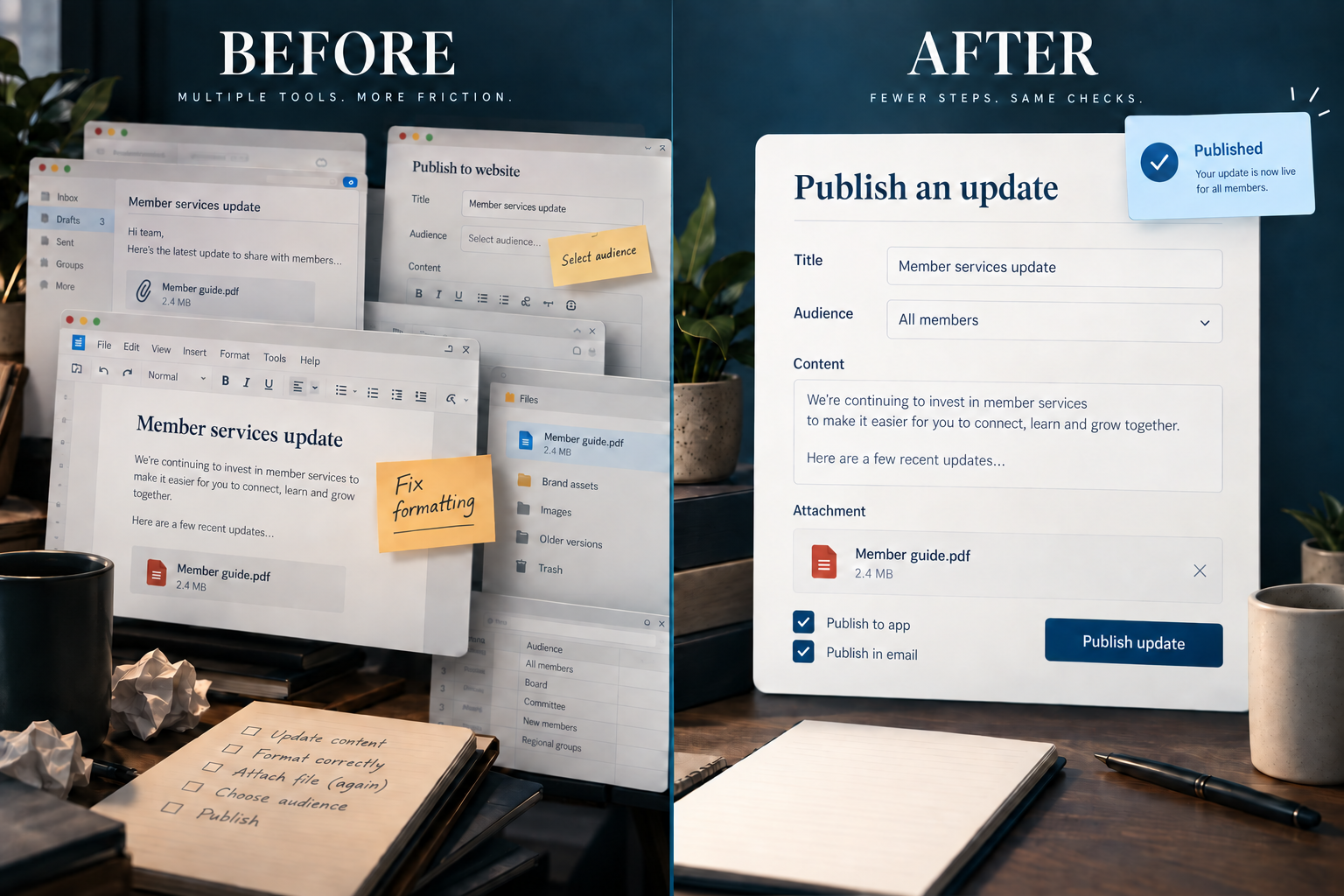
Our latest addition follows the same thinking. Content can now be published to the apps and sent by email with one click. An association still needs to decide what to say and who should receive it, but preparing separate versions for each channel should not become a job in itself. Members have different habits, and associations need ways to reach them without multiplying the work each time another channel is used.
These improvements are steps along a path we intend to continue. Bringing tools together was the starting point; we also need to look closely at the processes inside our own platform. How much work does it take to prepare an update, add a document, choose an audience and publish? Where does someone have to repeat a task? Which steps require care, and which exist because that is how the software happens to work? We need to keep asking these questions even when people have become comfortable with the current process.
The people doing this work have limited time. They might be association employees, board members or volunteers fitting committee responsibilities around another job. A task that takes a few unnecessary minutes once may seem harmless. Repeated across updates, documents and member requests, it becomes a regular demand on someone’s week. We should distinguish essential checks from repetitive work and make sure our platform respects the time of the people using it.
Members experience the result. They pay their dues and expect to find information, use services and get answers without needing to understand the association’s internal structure. They should be central to decisions about how those services work. Making publishing easier helps, but we also need to consider what happens afterwards. Is the purpose of an update clear? Can a member find the attached document again next week? Does the information explain what they need to do?
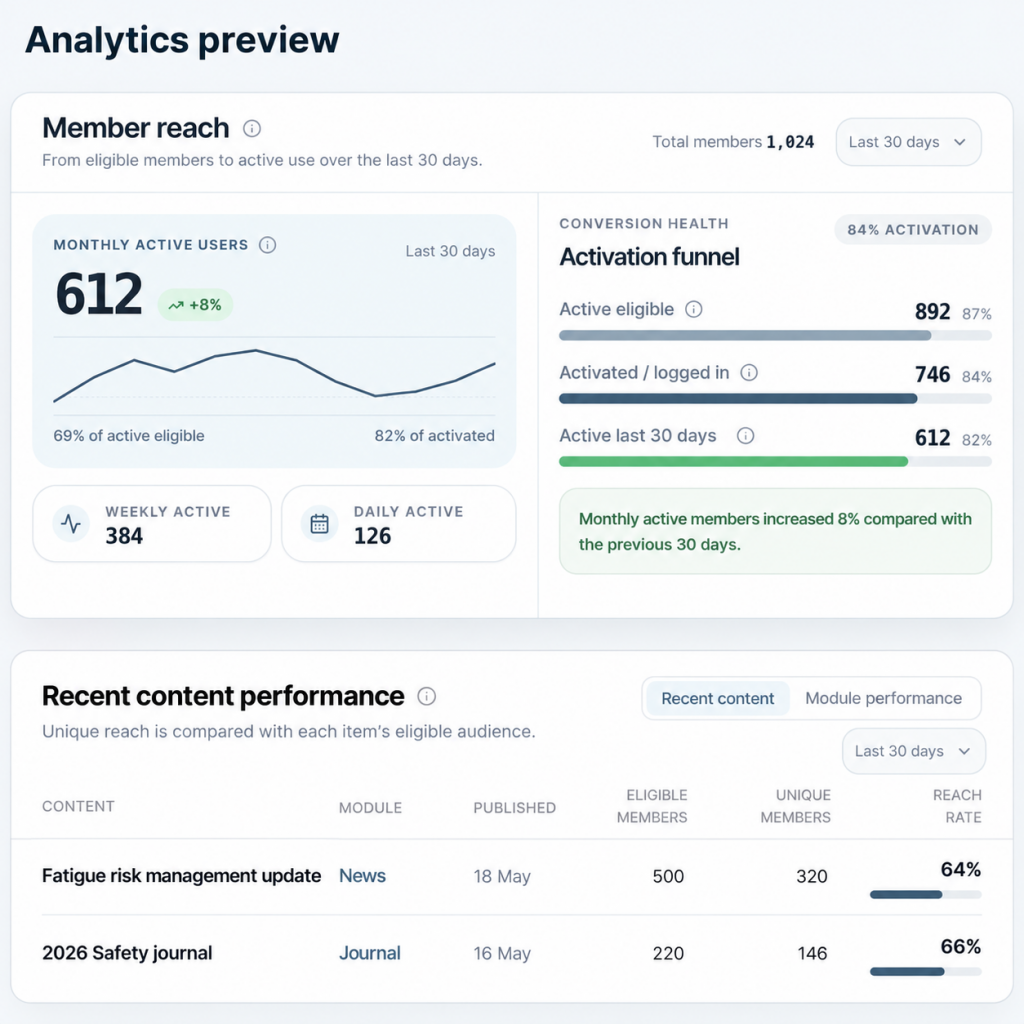
That brings us back to feedback. The person who prepared an update deserves to know whether members opened it and, where a response was requested, whether they responded. Our analytics work, currently in beta preview, is intended to help associations understand what gets used. Views need context: opening a page does not prove understanding, and a document for a small committee does not need a large audience to be useful. But that information gives the people doing the work a starting point for deciding what to improve.
Over the next six months, we will continue this work: improving the connections with clients’ existing systems, reducing the effort of preparing and publishing content, and providing better feedback on the result. We also want to hear about the awkward steps people have simply learned to live with. The integrations and publishing changes are part of that direction, and there is more to do. We want to do our part in making life a bit easier.